
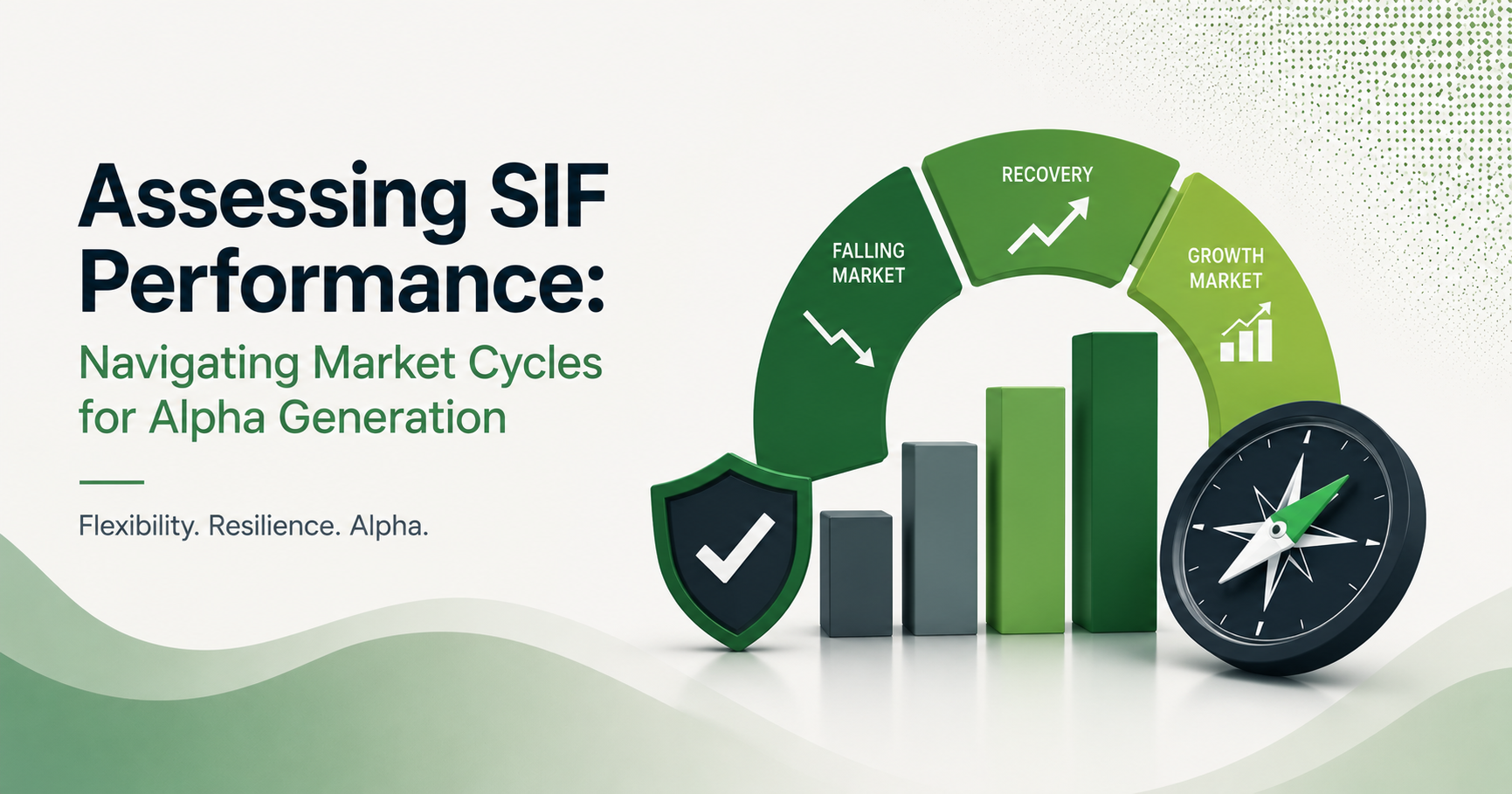
As volatility becomes a defining feature of financial markets, sophisticated investors in India’s alternative investment space are taking a closer look at how Specialised Investment Funds (SIFs) perform across different market cycles. For High Net Worth Individuals (HNIs) and Ultra HNIs (UHNIs), the focus has shifted beyond simple return generation toward a more pressing question: can these vehicles deliver genuine diversification and consistent alpha when traditional asset classes come under stress? That question is now central to portfolio construction in India’s fast-evolving wealth management ecosystem.
Typically structured as Alternative Investment Funds (AIFs) under the oversight of Securities and Exchange Board of India, SIFs provide fund managers with significantly greater flexibility than conventional mutual funds. Their mandates often allow the use of sophisticated strategies such as long-short equity, multi-asset allocation, private equity, venture capital, and structured credit. That flexibility matters. In falling markets, the ability to hedge, rotate capital, or shift exposure can help preserve capital—and in some cases, generate positive returns even as broader indices decline. This strategic freedom has made SIFs increasingly attractive to investors seeking resilience rather than pure market participation.
The scrutiny, however, is intensifying. Investors are no longer satisfied with headline returns alone. They want to understand what is driving performance: manager skill, strategic positioning, or simply rising market beta. That has raised the bar for fund managers, who must now demonstrate not only strong returns but disciplined risk management and adaptability under stress. Distributors, too, face growing pressure to clearly communicate the nuanced risk-reward profile of each strategy, including the specific market environments where a fund is expected to outperform—or struggle.
As India’s SIF market matures, qualitative assessment is emerging as the true differentiator. Track record consistency, transparent performance attribution, and a clearly articulated investment philosophy are becoming essential markers of credibility. For discerning investors, SIFs remain a powerful tool for advanced wealth creation, but the message is increasingly clear: superior outcomes will depend not just on access, but on rigorous due diligence and a deep understanding of how these strategies behave when markets turn volatile.