
Most investors think of debt funds as the boring, stable part of their portfolio. And for most of the time, that's exactly what debt funds deliver. But anyone who held long-duration debt funds in a rising interest rate environment knows that debt is not risk-free. When rates rise, bond prices fall, and long-duration funds can deliver negative returns for extended periods.
Traditional debt fund managers had limited options when facing such environments. They could shorten duration, move to floating rate instruments, or sit in overnight/liquid funds. What they couldn't do was actively profit from rising rates and falling bond prices.
The Debt Long-Short Fund changes that.
What This Fund Does Differently
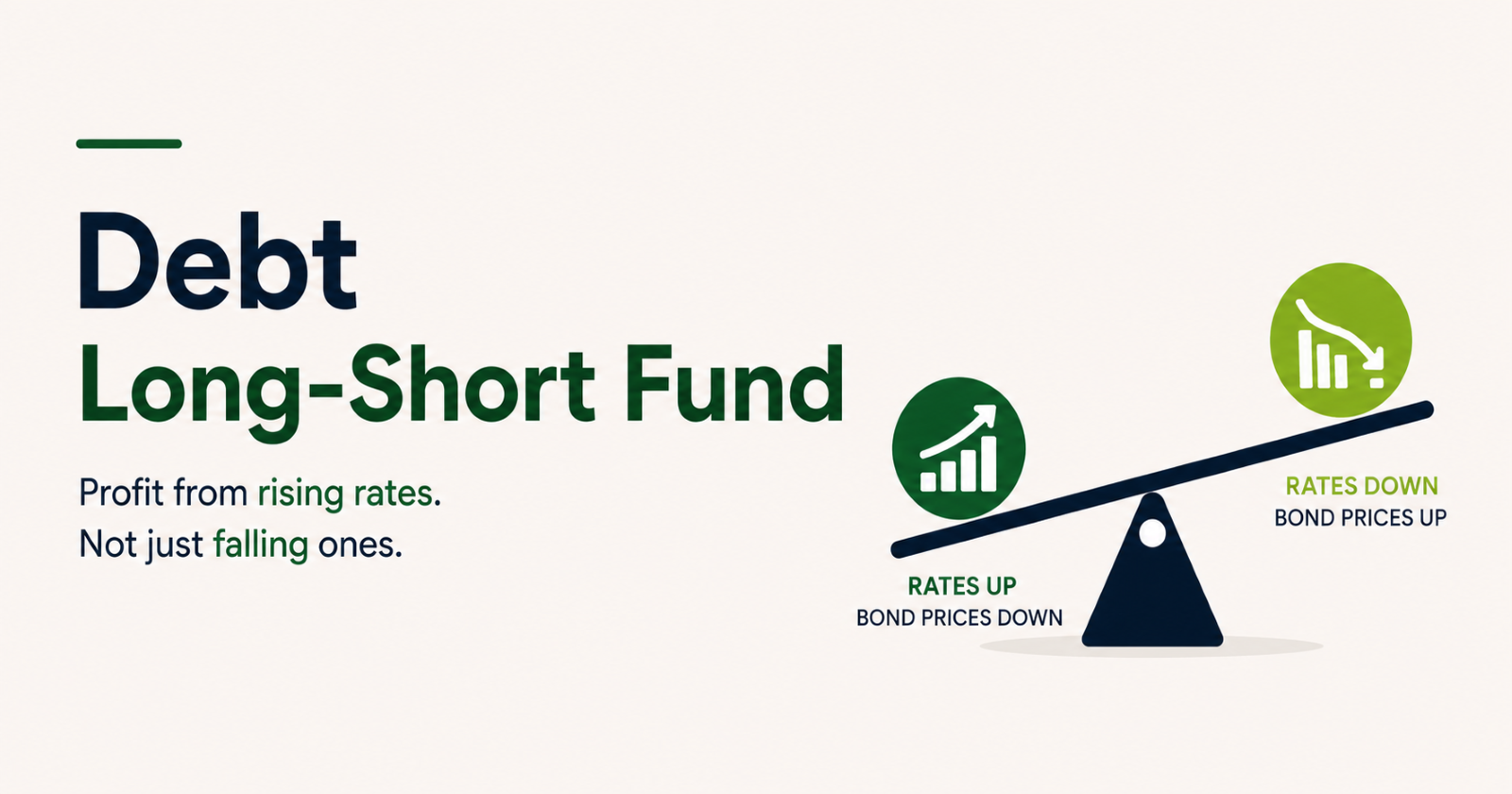
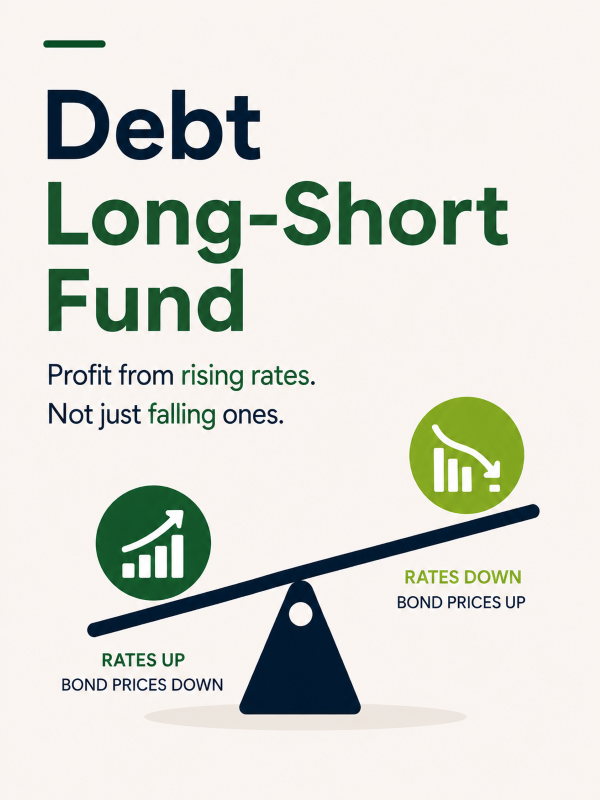
Think of bonds like a seesaw with interest rates. When rates go up, bond prices go down. When rates go down, bond prices go up. Every traditional debt fund sits on one side of that seesaw, it only makes money when rates fall. This fund can sit on both sides.
It invests in bonds and debt instruments across short, medium, and long timeframes. But when the manager believes rates are going to rise, and bond prices are going to fall, they can actively short those instruments and profit from that fall, instead of just watching losses accumulate. No fixed minimum allocation is required on the long side, giving the manager genuine freedom to position across the entire yield curve as the rate cycle evolves.
Where This Strategy Shines
When interest rates are rising, the environment where every traditional debt fund struggles, the manager can short long-duration bonds that are falling in price while staying invested in short-duration instruments that are holding value, as the impact size depends on the duration of the bonds.
But if rate movements are small, gradual, or unpredictable with no clear direction, the short book adds complexity without meaningful return. Debt derivatives are also less liquid than equity derivatives, and like all active strategies, it depends heavily on the manager reading the rate cycle correctly. A wrong duration call on both the long and short side simultaneously can hurt from two directions at once.