
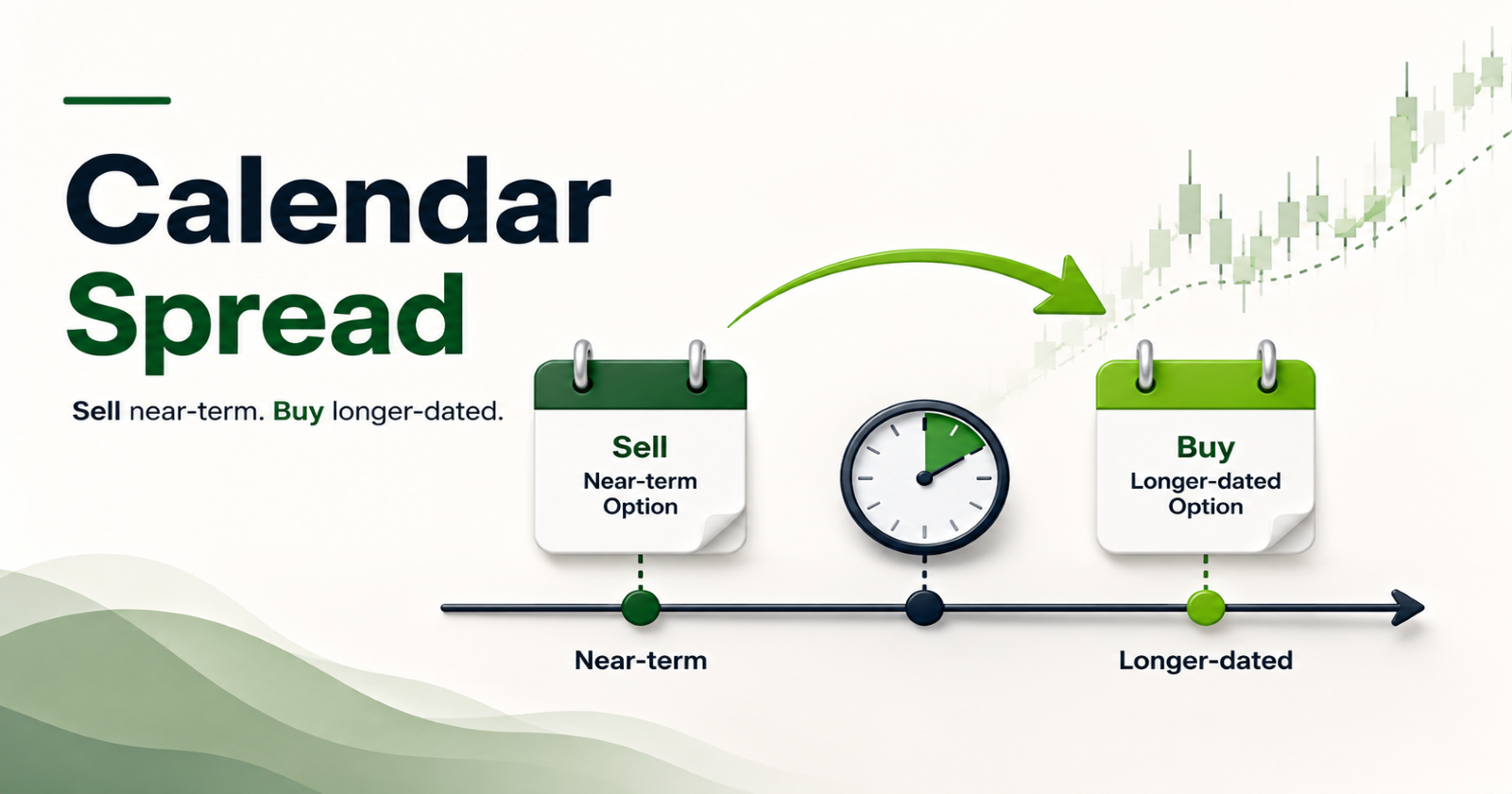
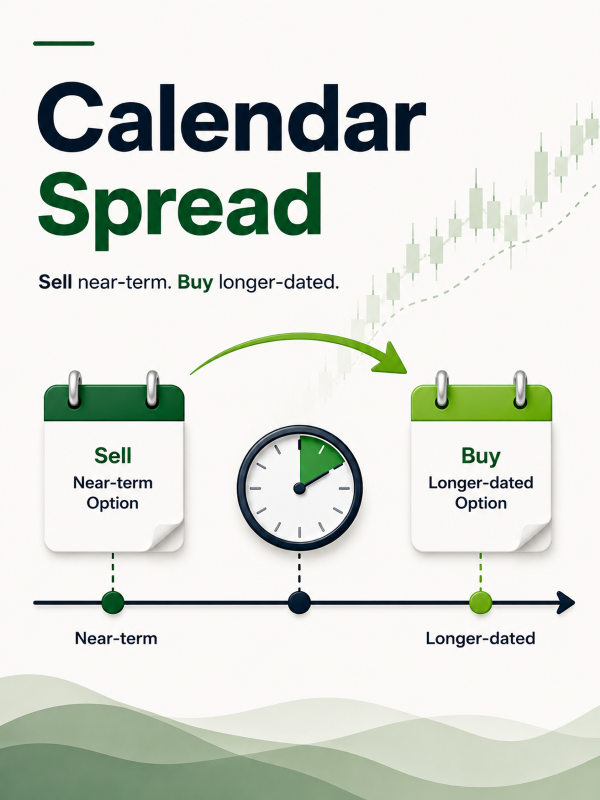
The structure is straightforward: sell a near-term option and simultaneously buy a longer-dated option on the same underlying at the same strike. The two positions sit on the same stock or index, at the same price level, but expire at different points in time.
The core insight is that time erodes option value, and it erodes the value of a shorter-dated option faster than a longer-dated one. The sold near-term option loses value quickly as expiry approaches, while the bought longer-term option retains more of its value. The difference in that decay rate is where the strategy earns its money.
When Does an SIF Manager Use This?
A manager uses a long calendar spread when they expect a stock to stay relatively stable in the near term but anticipate a significant move or known catalyst further out like a quarterly earnings release, a regulatory decision, a product launch, or a monetary policy event with a defined timeline.
The near-term sold option generates income from rapid time decay during the quiet period. The longer-dated bought option retains exposure to the future event without requiring the manager to pay full premium upfront, as the near-term sale funds a significant portion of the longer-dated option's cost. It is the most capital-efficient way to maintain exposure through a quiet period while waiting for a future catalyst to play out.
In the SIF context, the sold near-term leg counts toward gross exposure per the SEBI circular, options sold are calculated as Market Price of Underlying × Lot Size × Number of Contracts. The bought longer-dated leg is counted on premium paid only. The net exposure is therefore driven by the sold near-term leg, making the calendar spread moderate on the overall gross exposure calculation.
How It Plays Out
Setup: Stock A trading at ₹2,500. Lot size 500. Manager sells a near-month call at ₹2,500 strike (premium ₹90) and buys a next-month call at ₹2,500 strike (premium ₹140). Net premium paid = ₹50 per share. Total cost = ₹25,000 per spread.
Scenario | Near-Month Short Call (₹90) | Next-Month Long Call (₹140) | Net Impact |
Stock stays at ₹2,500 at near-term expiry | Expires worthless, keeps ₹90 | Still holds significant value, retains most of ₹140 | Best outcome (time decay fully captured on near leg) |
Stock rises to ₹2,700 at near-term expiry | Loses ₹200/share | Long call now worth considerably more | Near neutral to small gain depending on long call's remaining value |
Stock falls sharply to ₹2,200 at near-term expiry | Expires worthless, keeps ₹90 | Long call loses significant value | Net loss |
Stock stays flat through both expiries | Near-term expires worthless | Long call also decays, eventually loses ₹140 | Maximum loss = full net premium paid ₹50/share |
The first row is the ideal outcome, the stock sits quietly through the near-term expiry, the sold option decays entirely to zero, and the longer-dated option retains most of its value because more time remains. The manager has been paid ₹90 while keeping ₹140 worth of future exposure largely intact, a net cost reduction from ₹140 to just ₹50 for maintaining the longer-dated position.
The third row highlights the key risk unique to calendar spreads. A sharp fall hurts the near-term call expires worthless, which is good, but the longer-dated call also loses significant value as the stock moves away from the strike.
The last row is the slow-burn risk: if the stock stays completely flat through both expiries, the near-term leg expires worthless as planned, but the longer-dated option also gradually decays to zero. The maximum loss is always capped at the net premium paid, but it is a full loss of that amount if both the near-term quiet period and the anticipated catalyst both fail to materialise.