
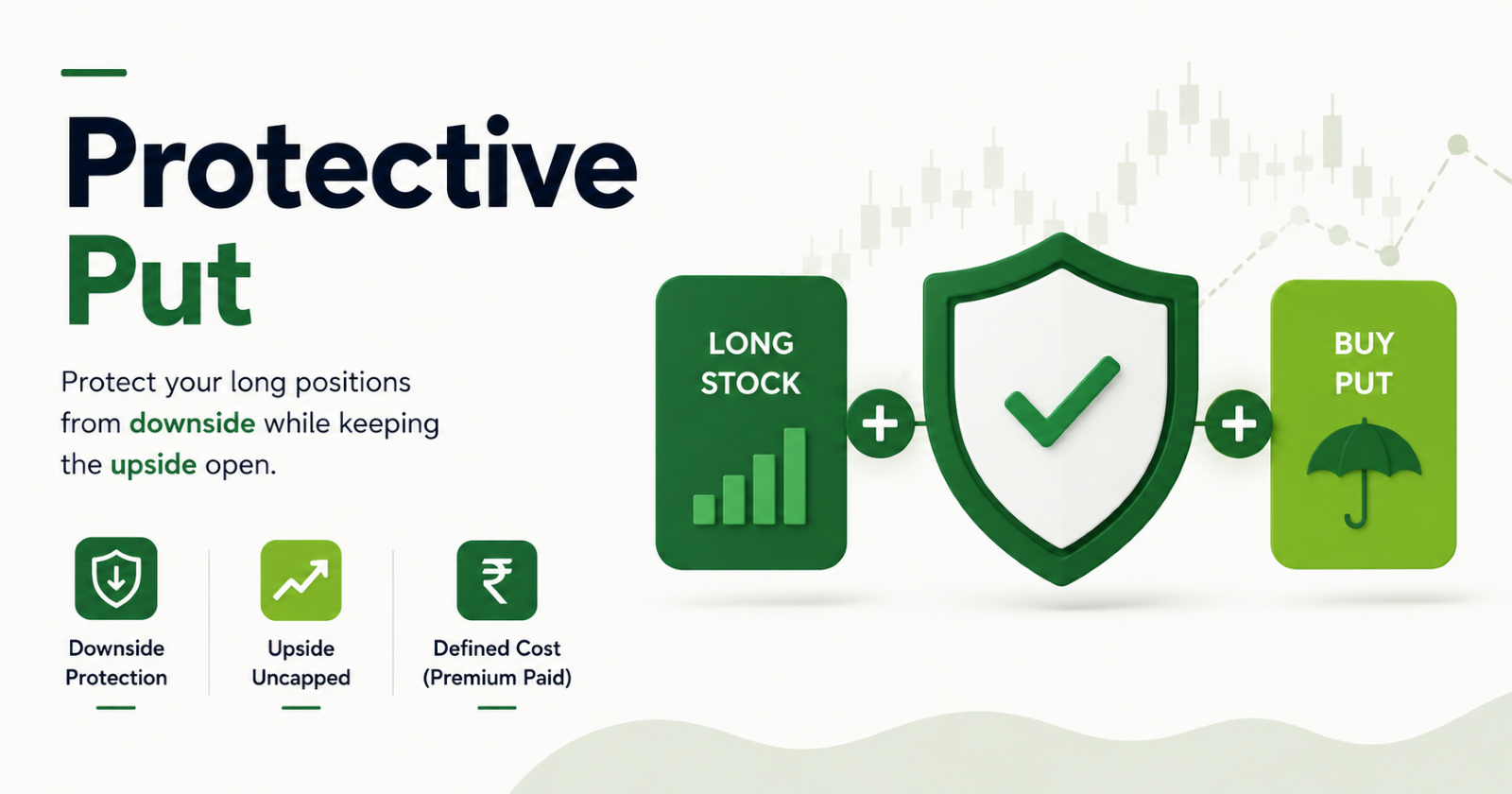
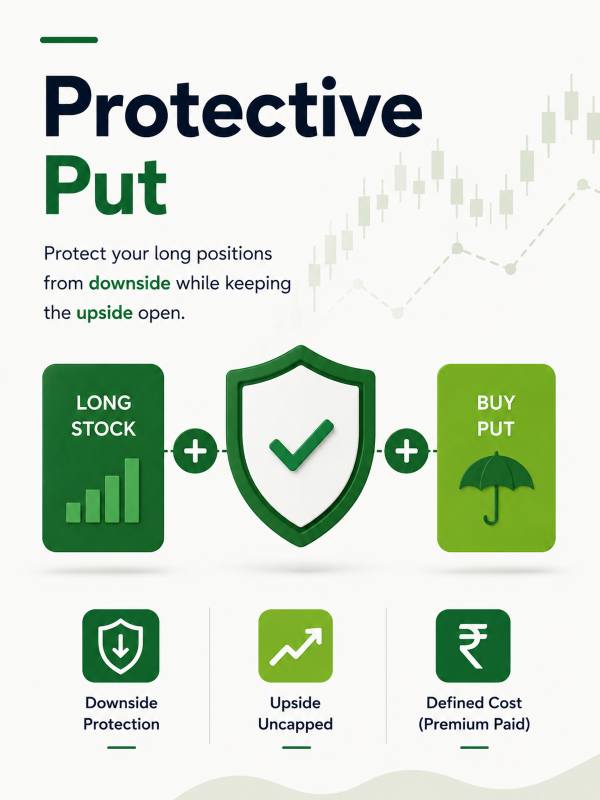
A protective put is the options equivalent of a futures hedge, but with one meaningful difference. Where a futures hedge neutralises both upside and downside, a protective put only cuts the downside, while the upside remains fully open.
The structure is simple: the manager holds a stock in the portfolio and simultaneously buys a put option on the same stock. If the stock falls below the strike price, the put gains in value, offsetting the loss on the cash position. If the stock rises, the put expires worthless but the cash position captures the full gain. The only cost is the premium paid for the put.
Think of it as paying a small, defined fee to keep the upside of a position while putting a floor under the downside.
When Does an SIF Manager Use This?
A manager uses a protective put when they have a strong long-term conviction in a stock but face a specific near-term risk, like an upcoming policy decision, sector-level headwinds, or earnings uncertainty, that could cause a sharp short-term fall.
In the SIF context, the protective put sits within the hedging and portfolio rebalancing category, which means separate from the 25% unhedged short exposure limit. Per the SEBI circular, exposure for options bought is calculated as Option Premium Paid × Lot Size × Number of Contracts, making the gross exposure impact of buying puts relatively small compared to the protection they provide.
How It Plays Out
Setup: Manager holds Stock A at ₹2,500 per share. Buys a put option at strike ₹2,400, premium ₹85, lot size 500. Total premium paid = ₹42,500 per contract.
Scenario | Cash Position (Long Stock A) | Long Put (Strike ₹2,400) | Net Impact |
Stock rises to ₹2,800 | Gains ₹300/share | Put expires worthless, loses ₹85 premium | Net gain ₹215/share |
Stock stays at ₹2,500 | No change | Loses ₹85 premium | Small loss = premium cost |
Stock falls to ₹2,200 | Loses ₹300/share | Put gains ₹200/share (₹2,400 - ₹2,200) | Net loss capped at ₹185/share |
Stock falls to ₹1,800 | Loses ₹700/share | Put gains ₹600/share | Net loss still capped at ₹185/share* |
*The maximum loss is always capped at: (Stock Price − Strike Price) + Premium Paid = (₹2,500 − ₹2,400) + ₹85 = ₹185 per share, regardless of how far the stock falls.
The last two rows tell the most important story. No matter how severely the stock falls, the loss is floored. The futures hedge achieves neutrality in both directions. The protective put achieves protection only on the downside.